

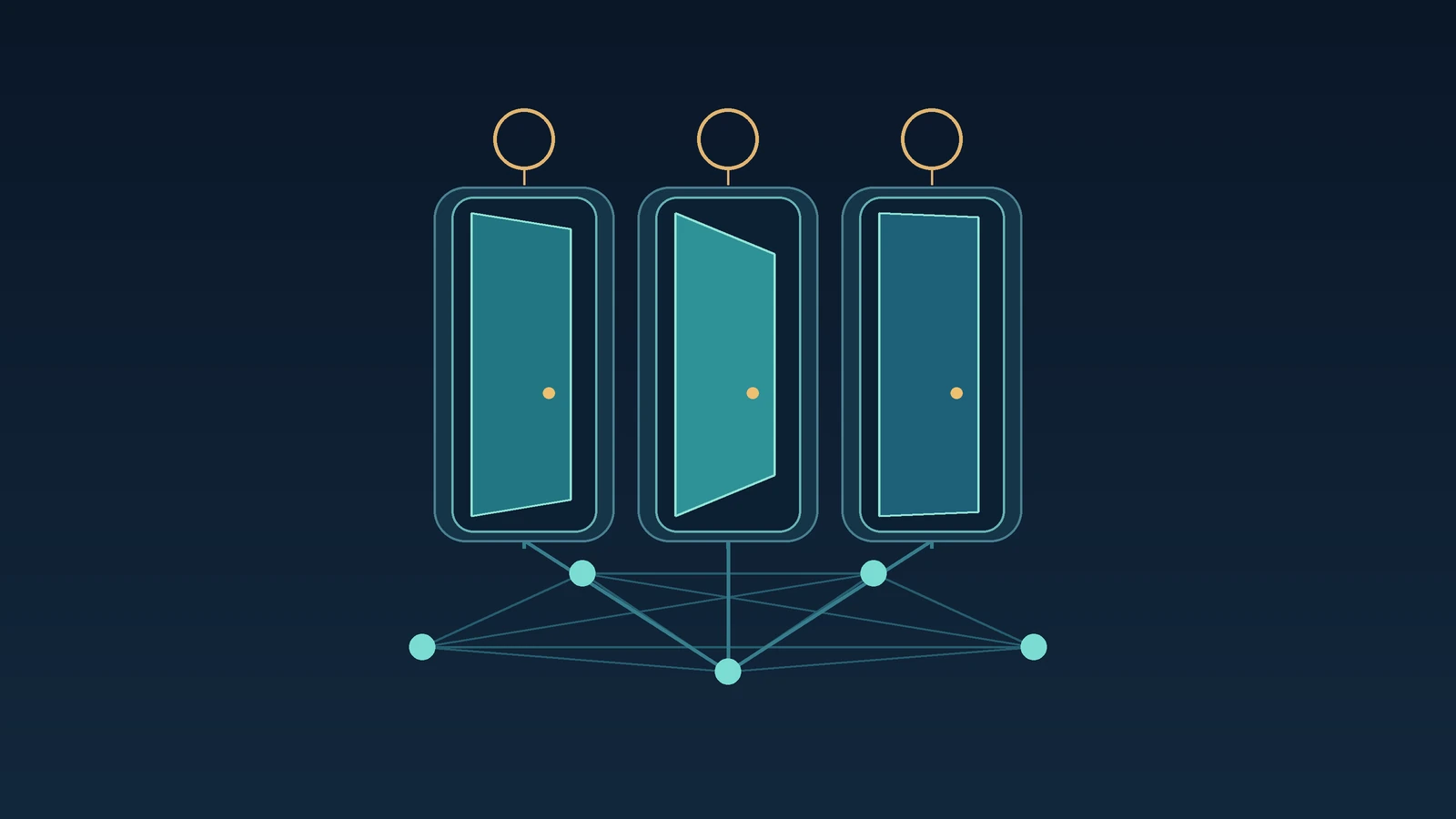
You open a familiar social app and find that someone else has changed the room: a new assistant, a different interface, another rule about what appears first. You can complain or leave. But what if changing the room did not mean losing the people inside it?
On October 29, 2026, MIT News described Social.Wiki, an experimental framework built by researchers at MIT and collaborators. It lets people edit social applications within its ecosystem and choose which edits they see. The scope matters: this is not a tool for rewriting any existing commercial platform.
A shared website need not mean one identical experience
The system gives websites an edit button. A person can modify source code directly or ask an AI assistant to make a change. According to MIT, the platform handles back-end work such as databases and servers, lowering the barrier to creating applications without conventional programming expertise.
The more unusual idea concerns what happens next. An edit need not become everyone’s interface. Under what the researchers call plural governance, each user chooses a policy determining which changes appear. Someone might accept changes endorsed by two friends; someone else might trust particular editors. The browser applies that policy when presenting a site.
It is not one new rule for everyone. It is an attempt to make the rules selectable.
That distinction opens a practical question: can people remain connected while disagreeing about how their shared tools should work? Social.Wiki explores that possibility through software architecture rather than asking a single moderator to settle every choice.
What the demonstrations actually show
MIT reports case studies involving a customizable messaging application and a ride-sharing application where riders can adjust a proposed fare using a transparent living-wage calculator. During a hackathon, participants also made a housing-cooperative communication tool and a garden-themed microblogging site.
These are concrete demonstrations of variety, not evidence of adoption at the scale of an established social network. The announcement says the team intends to deploy the platform more broadly and obtain feedback from more diverse groups. It also says the paper is scheduled for presentation at the ACM Symposium on User Interface Software and Technology in November.
Control over data is a design goal, not a magic shield
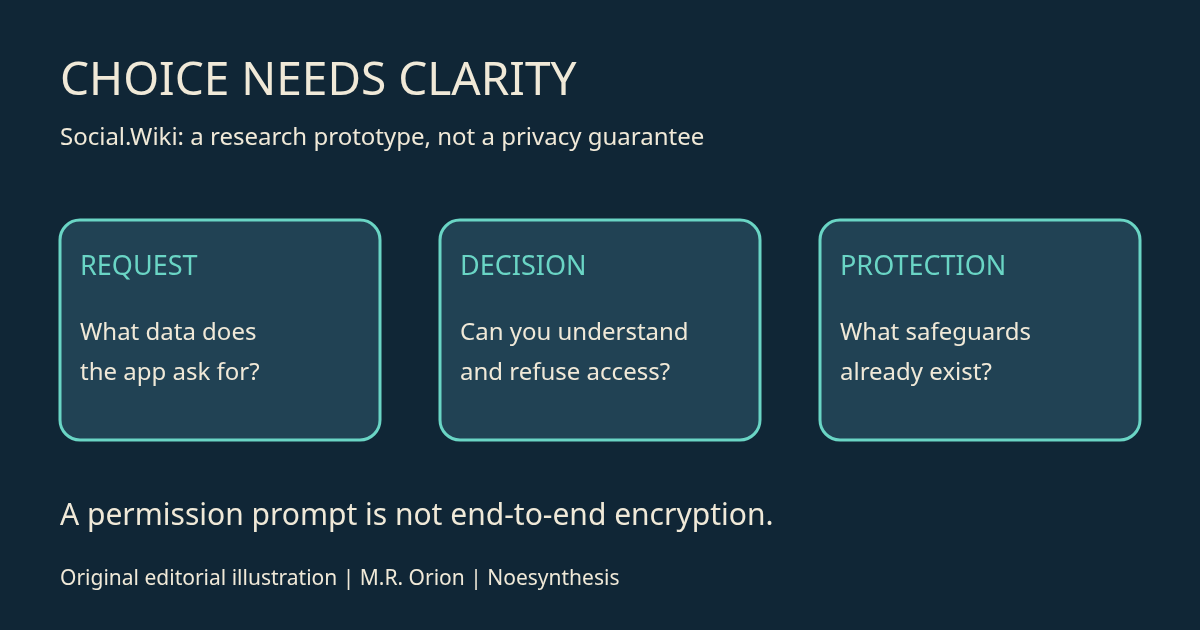
The framework separates user data from the websites that access it. A component called a data guard asks users to review requests for access. That creates a visible point of decision — a door rather than an invisible passage — but a permission prompt alone does not establish that people understand every consequence.
One limitation deserves particular attention: MIT lists end-to-end encryption for private-message data among the technical upgrades the researchers want to add. Readers should not assume that this protection is already provided simply because the infrastructure is decentralized.
Future evaluation should ask whether ordinary users can understand competing policies, assess access requests and recover from mistakes. Those are questions raised by this coverage, not results established by the announcement. More choice can create more responsibility; the usefulness of the design will depend partly on how manageable those choices become.
The question beyond the edit button
For now, Social.Wiki offers a research example of a different relationship between people and their online spaces. It does not prove that decentralized systems resolve moderation, privacy or trust. It makes those questions available for a different kind of experiment.
When you assess the next promise of digital freedom, look for the decision you can actually make, the protection already implemented and the limitation still acknowledged. An edit button is a beginning. Agency needs a usable door.
Sources: MIT News, Adam Zewe, October 29, 2026, read in full. Research paper linked by MIT: “Social.Wiki: A Web Held in Common” (provided for further reading; the PDF was not independently reviewed for this coverage). Project website.
Keep the question open
Before accepting a platform’s promise, separate what has been demonstrated from what you expect it to mean. Continue with Facts and Interpretations: How to Tell Them Apart. When you discuss a new tool with someone who sees it differently, try questions that leave room for an unexpected answer. A conversation about technology becomes more useful when we can examine both the evidence and our assumptions.
For more reporting and reflections, explore the institute’s articles on language, evidence and technology.
M.R. Orion

